Custom software development
Applications built for a specific operational need, from data model to interface.
Drawing 001 · Smile Aid GmbH · IT Engineering
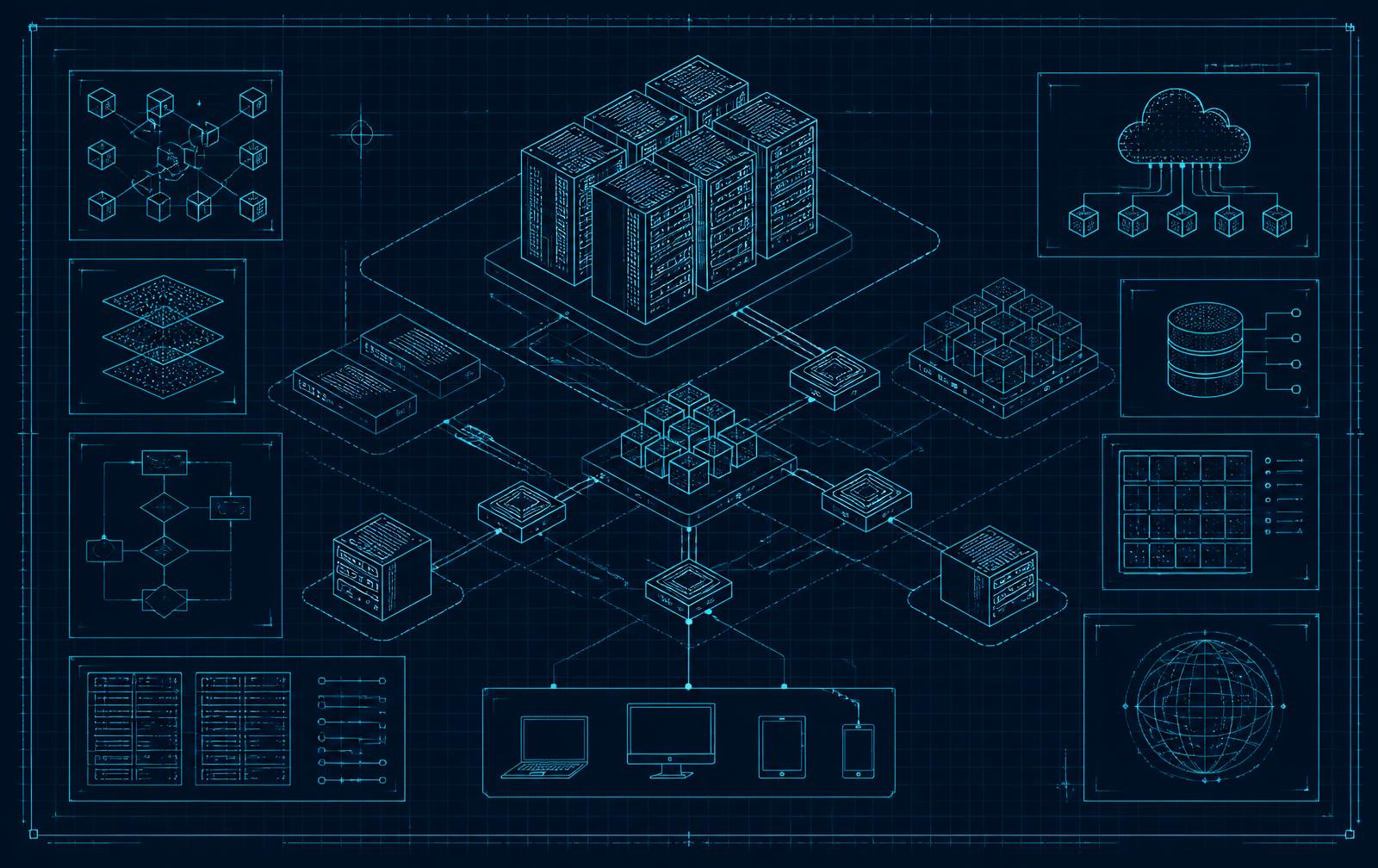
Smile Aid GmbH is an IT company that designs, builds and maintains software systems. We treat every engagement like a technical drawing: the constraints are written down, the interfaces are specified, the tolerances are agreed, and only then does construction start.
02Company overview
Smile Aid GmbH works with organisations that depend on software to operate. Some of that software is customer-facing, some of it runs quietly between systems, and most of it has to keep working while it changes. Our work covers the whole of that lifecycle: analysis, design, implementation, integration, operation and revision.
We do not separate "the project" from "the system it lives in". Before writing new code we look at what already exists — the data it holds, the interfaces it exposes, the deployment path it follows and the people who maintain it. That context decides what a sensible change looks like.
Our engagements are documented in English, delivered in reviewable increments, and handed over in a state where another engineer can continue the work without a private explanation from us.
03Core IT services
Each discipline is described in detail on the Services page.
Applications built for a specific operational need, from data model to interface.
Browser-based systems with accessible interfaces and dependable server behaviour.
Environments, networking, deployment automation and cost-aware resource design.
Connecting applications, APIs and data sources so information moves reliably.
Technical assessment, architecture options and written recommendations.
Hardening, dependency review, access control and secure development practice.
Pipelines, warehouses, transformations and reporting layers you can verify.
Corrective work, dependency upgrades and performance profiling over time.
04Areas of expertise

Service design, API contracts, background processing, transactional correctness and schema evolution.
Component architecture, state handling, accessibility, and rendering performance on real devices.
Infrastructure as code, container images, pipelines, environment parity and rollback paths.
Ingestion, modelling, validation and the reporting layers that sit on top of it.
Incremental refactoring, strangler patterns, and interface boundaries that allow replacement in stages.
05Business challenges we solve
Manual steps, spreadsheets and re-keyed data hold a process together. We replace the fragile parts with software that records what happened and why.
Two or more applications hold overlapping information and disagree. We define the source of truth and build the integration around it.
Every release carries risk because nothing is isolated or tested. We introduce boundaries, tests and delivery automation gradually.
Environments were configured by hand and drift apart. We describe them as code so they can be rebuilt and reviewed.
Reports contradict each other because transformations are undocumented. We rebuild the pipeline with validation at each step.
Dependencies, access rights and exposed surfaces have never been inventoried. We assess and document them before recommending changes.
06Technology capabilities
Technology choices are decisions with a maintenance cost attached. We favour mainstream, actively supported components with clear upgrade paths, and we record the reasoning behind each significant choice so it can be revisited later.
Application layer
Typed languages, service boundaries, API-first contracts
Persistence
Relational databases, analytical stores, caching, migrations
Delivery
Containers, infrastructure as code, CI pipelines, staged releases
Operations
Structured logging, metrics, tracing, alerting and runbooks
07Development process
Constraints, current systems, stakeholders and the definition of a successful outcome.
Interfaces, data model, non-functional requirements and open questions written down.
Component boundaries, deployment topology and the trade-offs behind each decision.
Small reviewed increments, tests where they carry signal, continuous integration.
Functional checks, performance profiling, security review and environment validation.
Release, observability, documentation handover and a plan for subsequent revisions.
08Industries served
Industry context changes the constraints far more than the technology. The list below describes the kinds of environments our engineering practice is designed to work within.
Workflow, document handling and internal tooling.
Catalogue, order and fulfilment integrations.
Tracking, scheduling and partner data exchange.
Production data capture and reporting systems.
Reconciliation, auditability and controlled access.
Careful data handling and strict access boundaries.
Content delivery and accessible interfaces.
Additional engineering capacity for existing products.
09Security and quality approach
Security and quality are properties of how a system is built, not features added at the end. We work with least-privilege access, managed secrets, reviewed dependencies and validated inputs, and we write down the assumptions behind each control so they can be re-checked later.
10Collaboration principles
Decisions, risks and open questions are recorded in English so nothing depends on memory.
Work is shown while it is still cheap to change, not once it is finished.
You speak with the people writing the code rather than through a relay.
Delays, unknowns and mistakes are reported when they appear, not at the deadline.
11Why companies work with us
Documentation, naming and structure are part of the deliverable, so your team is not dependent on us afterwards.
Where a requirement is ambiguous we ask before building, and we record the answer.
You are told what a decision costs in maintenance, performance or complexity.
Deployment, monitoring and rollback are designed with the feature, not bolted on.

12Frequently asked questions
13Company contact details
Correspondence is handled by email in English. Technical questions, project enquiries and requests relating to our legal documents all use the same address. Further detail is listed on the Contacts page.